
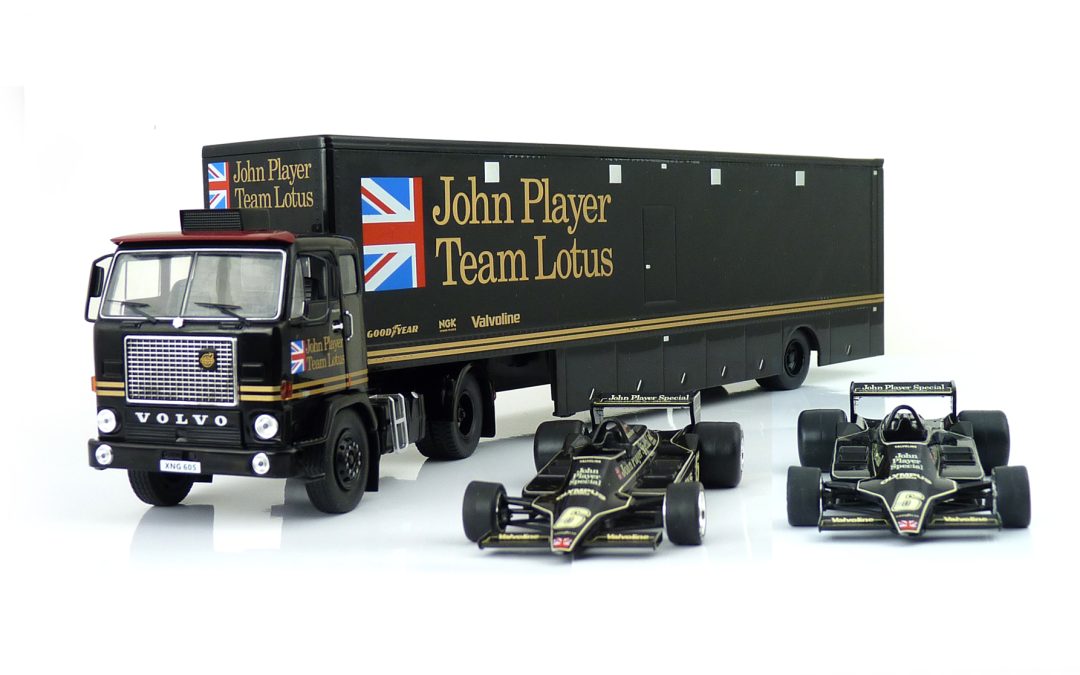
John Player Special Lotus
The John Player Special Lotus Formula One team of 1977–1979 represents one of the most influential and visually iconic periods in Grand Prix history. Sponsored by the British tobacco brand John Player Special, Team Lotus combined striking black-and-gold livery with revolutionary engineering, redefining both performance and aesthetics in Formula One.
In 1977, Lotus was emerging from a difficult transitional phase following the loss of founder Colin Chapman’s earlier dominance. With drivers Mario Andretti and Gunnar Nilsson, the team introduced the Lotus 78, a car that quietly laid the foundations for a technical revolution. The Lotus 78 pioneered full ground-effect aerodynamics, using sculpted sidepods to create downforce through airflow beneath the car. Although reliability issues limited its ultimate success that season, Andretti still claimed victories, signaling that Lotus had found a transformative concept.
The breakthrough came in 1978 with the Lotus 79. An evolution of the ground-effect idea, the 79 perfected underbody aerodynamics and proved devastatingly effective. Driven by Mario Andretti and Ronnie Peterson, the car dominated the season. Andretti secured the World Drivers’ Championship, while Lotus won the Constructors’ Championship. Tragedy struck late in the year when Peterson was fatally injured at the Italian Grand Prix, casting a shadow over an otherwise triumphant season.
By 1979, however, Lotus faced intense competition as rival teams rapidly adopted and refined ground-effect technology. The Lotus 80 attempted to push the concept further but proved problematic, and the team struggled to replicate its earlier dominance. Despite flashes of competitiveness, the season marked the end of Lotus’s technical advantage.
The John Player Special Lotus era from 1977 to 1979 remains legendary. It combined bold innovation, championship success, unforgettable drivers, and one of the most enduring liveries in motorsport history, leaving a lasting legacy on how Formula One cars are designed and perceived.
